🎉 Up to 70% Off Selected ItemsShop Sale

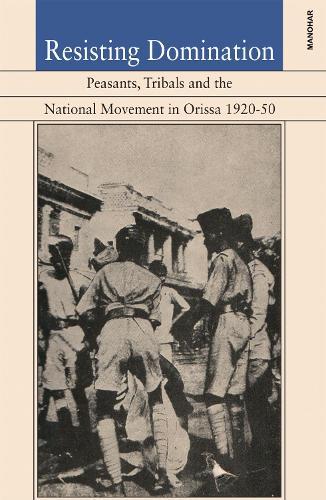
Resisting Domination
Indian nationalism has been a site for major debates and scholarly interventions. Issues centring around the question of leadership and participation, its logic and nature have attracted many historians. This book situates Orissa within the broad context of the national movement. In doing so it deals with a region neglected by serious historical enquiry. In particular, its focus on the peasants, tribals and the outcastes of this area makes it an important and pioneering work. Rich in empirical data, it draws from a wide range of sources, including folklore and oral evidence, to contour the complexities of popular perceptions. This is then integrated into a study of their resistance?to?feudal?and?colonial?oppression.
The value of this work lies particularly in its making visible the unrecognised role of society's marginals in the national movement in Orissa.
While attempting this task it departs from the centrality sometimes given to the Congress, or to the ‘Subalterns’. Instead it explores in a far more dialectical fashion how the Congress itself was being shaped by the common?people,?while?shaping?them.
Being an original contribution, this book will be of interest to a variety of readers – students of social history, peasant studies and the politics of modern?India.
The value of this work lies particularly in its making visible the unrecognised role of society's marginals in the national movement in Orissa.
While attempting this task it departs from the centrality sometimes given to the Congress, or to the ‘Subalterns’. Instead it explores in a far more dialectical fashion how the Congress itself was being shaped by the common?people,?while?shaping?them.
Being an original contribution, this book will be of interest to a variety of readers – students of social history, peasant studies and the politics of modern?India.
$24.15
Original: $68.99
-65%Resisting Domination—
$68.99
$24.15Product Information
Product Information
Shipping & Returns
Shipping & Returns
Description
Indian nationalism has been a site for major debates and scholarly interventions. Issues centring around the question of leadership and participation, its logic and nature have attracted many historians. This book situates Orissa within the broad context of the national movement. In doing so it deals with a region neglected by serious historical enquiry. In particular, its focus on the peasants, tribals and the outcastes of this area makes it an important and pioneering work. Rich in empirical data, it draws from a wide range of sources, including folklore and oral evidence, to contour the complexities of popular perceptions. This is then integrated into a study of their resistance?to?feudal?and?colonial?oppression.
The value of this work lies particularly in its making visible the unrecognised role of society's marginals in the national movement in Orissa.
While attempting this task it departs from the centrality sometimes given to the Congress, or to the ‘Subalterns’. Instead it explores in a far more dialectical fashion how the Congress itself was being shaped by the common?people,?while?shaping?them.
Being an original contribution, this book will be of interest to a variety of readers – students of social history, peasant studies and the politics of modern?India.
The value of this work lies particularly in its making visible the unrecognised role of society's marginals in the national movement in Orissa.
While attempting this task it departs from the centrality sometimes given to the Congress, or to the ‘Subalterns’. Instead it explores in a far more dialectical fashion how the Congress itself was being shaped by the common?people,?while?shaping?them.
Being an original contribution, this book will be of interest to a variety of readers – students of social history, peasant studies and the politics of modern?India.